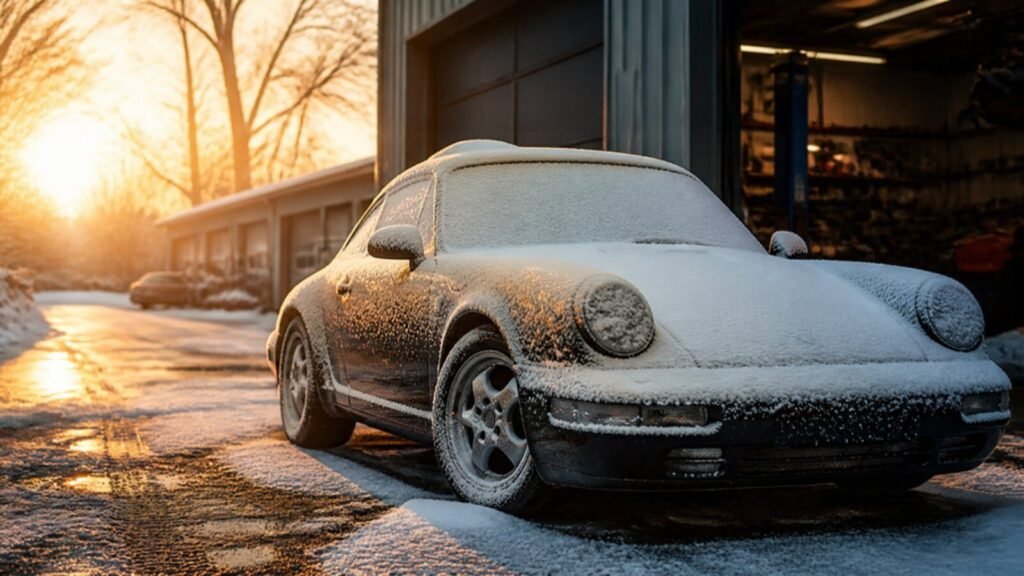
Quick answer: If your car won’t start in cold weather, suspect the battery first. AAA says a battery loses about 35% of its strength at 32°F and about 60% at 0°F. Thick oil, fuel problems and a worn starter come next. If the car starts but then smokes, runs rough or shifts badly, the cold is exposing engine or transmission wear.
Most advice for a car that won’t start in cold weather ends with “buy a new battery.” Often that’s the right call. But there’s a second group of cars that gets less attention: ones whose engines or transmissions were already worn. For them, the first hard freeze is when the wear finally shows. This guide helps you work out which group your car is in.
Disclosure: This guide is published by KM Pathway LLC, which sells tested used engines and transmissions. Most cold-weather no-starts are a battery, starter or fuel problem. None of those needs a replacement engine or transmission, so fix the cheap part first.
Cold-weather no-start at a glance
| Likely cause | Typical clue | First thing to try | DIY or shop? |
|---|---|---|---|
| Weak or old battery | Rapid clicking, slow crank, dim lights | Clean terminals, jump-start, load test | DIY or parts store |
| Oil too thick for the cold | Slow crank on the coldest mornings | Use the winter grade in your owner’s manual | DIY or oil change |
| Fuel delivery problem | Normal crank, no start | Keep the tank half full; check fuel pressure | Shop |
| Worn starter or alternator | Single click, or battery keeps going flat | Test the starter and charging system | Shop or parts store |
| Engine wear (low compression) | Hard start, blue smoke, rough idle | Compression test | Shop |
| Transmission wear | Delayed engagement, hard shifts when cold | Check fluid level and condition | Shop |
Why Won’t My Car Start When It’s Cold?
Because cold hurts the battery and the engine at the same time. The battery puts out less power, and thick oil makes the engine harder to turn over.
AAA says that at 0°F, a car “may need up to twice the amount of current than normal to start the engine.” Interstate Batteries puts it this way: “As the temperature decreases, the available starting power diminishes while the required starting power increases.”
Here are the usual causes, roughly from most to least common:
- Weak or old battery. This is the big one. A battery that just got by in October often gives up in December. Check that its cold cranking amps (CCA) rating matches what your owner’s manual calls for.
- Oil that is too thick. Cold oil moves slowly. The starter has to work harder, and parts run longer without full lubrication right after startup.
- Fuel delivery problems. Water in the fuel system can freeze, and a fuel pump that’s already weak struggles more in the cold.
- Worn starter or alternator. A starter that pulls too much current drains a cold battery fast. An alternator that can’t fully recharge the battery on short trips leaves you with less power every morning.
- Low compression. Worn rings or valves make a cold engine much harder to fire. People miss this one because the battery gets blamed first.
Driving a diesel? Add glow plugs to the list. They heat the cylinders so diesel fuel can ignite, and a weak one makes cold starts slow and smoky.
What Does the Sound Tell You?
| What you hear | Likely cause |
|---|---|
| Rapid clicking, dash lights dim | Weak or dead battery, bad connection |
| Single click, no crank | Starter or starter relay |
| Slow, labored crank | Weak battery or oil too thick |
| Normal crank, no start | Fuel, ignition or low compression |
| Starts, then runs rough and smokes | Engine wear showing up in the cold |
How Does Cold Weather Expose a Worn Engine?
Cold rarely breaks a healthy engine, but it makes existing wear much easier to see and hear. A worn engine leaks compression and builds oil pressure slowly, and you notice it most on frozen mornings.
When the metal is cold, the gaps between pistons, rings and cylinder walls are at their widest. On a good engine, oil fills those gaps fast. On an engine with worn rings, compression leaks past. With worn bearings, oil pressure is slow to build. Either way, every cold start adds a little more wear.
Signs the problem is bigger than a battery:
- Blue smoke at startup that fades as the engine warms (oil getting past rings or valve seals).
- Knocking or ticking that lasts more than a few seconds after a cold start.
- A rough idle or misfire that doesn’t clear up once the engine is warm.
- A low oil pressure warning on cold mornings.
- Adding oil every few hundred miles.
Key takeaway: if the battery tests good and a jump-start doesn’t help, or the car starts but runs badly, get a compression test before winter gets worse. Our guide to the signs of engine failure covers the warning signs in more detail.
How Does Cold Weather Expose a Worn Transmission?
Cold thickens transmission fluid and shrinks rubber seals, so a worn transmission shifts late, slips or leaks until it warms up. Firestone notes that “extreme cold can cause your transmission fluid to thicken,” and that “thicker fluid can also cause low pressure for the transmission system.” It adds that cold “can make the rubber seals and gaskets contract.”
On a healthy transmission, you might notice slightly slow shifts for the first minute or two. On a worn one, watch for:
- A pause before the car moves after you shift into Drive or Reverse.
- Hard or late shifts until the car warms up.
- Slipping that gets worse on cold mornings.
- New fluid spots under the car after a freeze (shrunken seals leaking).
If these signs go away once the car is warm, don’t treat that as a pass. They are early warnings. The cold is showing you wear that warm fluid hides. If the slipping keeps getting worse, read our guide to transmission slipping.
What Should You Do When Your Car Won’t Start in Cold Weather?
Start with the battery, since it’s the cheapest and most likely fix. Then work down this list in order:
- Check the battery first. Clean the terminals and get a load test; many auto parts stores do it for free. AAA Northeast says the average battery lasts three to five years in its region, so an older battery is the prime suspect.
- Don’t crank for long stretches. Crank for a few seconds, wait about 30 seconds, then try again. Long cranking can overheat the starter.
- Use the right oil grade. The number before the “W” shows how well oil flows when cold. A lower number flows more easily, so a 0W-20 moves faster on a frozen morning than a 5W-30. Use the grade your owner’s manual lists.
- Keep the tank at least half full to limit moisture in the fuel system.
- Think about a block heater if your winters regularly drop well below zero. Our guide to the engine block heater explains when it’s worth it.
Done all six and your car won’t start in cold weather, or it starts and runs badly? Then you need a real diagnosis, not another battery.
Should You Repair or Replace the Engine or Transmission?
Repair it if the engine and transmission run well once started. Only compare a rebuild with a tested used unit when the wear is real and the rest of the vehicle is worth keeping.
Here’s an example (an illustration, not a specific customer). A 2012 pickup with 190,000 miles cranks slowly every cold morning, puffs blue smoke and burns a quart of oil every 800 miles. A new battery won’t fix that. The real choice is between an engine rebuild, a replacement engine or selling the truck.
A rough guide:
| Situation | Usual best move |
|---|---|
| Battery, starter or fuel issue, engine runs well once started | Fix the part, keep driving |
| Low compression or oil burning, body and frame solid | Price a tested used engine vs a rebuild |
| Transmission slipping cold and warm | Diagnose, then compare rebuild vs used unit |
| Rust, multiple failures, low value | Probably time to sell |
KM Pathway LLC sells tested used engines and transmissions across the US, with a 90-day warranty, free shipping to the lower 48 states and 30-day returns. If winter has exposed a worn engine or transmission, call (888) 928-5882 or get a free quote. You can also browse our used engines.
Cold-Start Terms Explained
Quick definitions for the terms used in this guide:
- Cold cranking amps (CCA): how much current a battery can deliver at 0°F for 30 seconds while keeping a usable voltage. More CCA helps in winter.
- Load test: a battery test that puts a heavy draw on the battery to see whether it holds voltage, not just whether it shows a charge.
- Oil viscosity (“W” rating): how thick the oil is. The number before the W rates cold flow; lower means it flows more easily when cold.
- Compression test: a test that measures how well each cylinder seals. Low readings point to worn rings, valves or a head gasket.
- Block heater: an electric heater that warms the engine before you start it.
- Delayed engagement: a pause after you shift into Drive or Reverse before the transmission grabs.
- ATF: automatic transmission fluid. It thickens in the cold.
- Glow plugs (diesels only): heaters that warm the cylinders so diesel fuel can ignite on a cold start.
Frequently Asked Questions
Why does my car crank but not start when it’s cold?
If the engine cranks at normal speed but won’t fire, the battery is probably fine. Look at fuel, ignition and compression instead. A weak fuel pump, frozen moisture in a fuel line or worn piston rings can all cause it. A shop can test fuel pressure and compression quickly to narrow it down.
Can cold weather damage an engine or transmission?
Cold alone rarely kills a healthy engine. The risk is wear: every cold start runs parts for a moment before oil fully circulates, and that adds up on an engine that’s already worn. In a worn transmission, thick fluid and shrunken seals can bring on slipping, hard shifts and leaks.
Is it bad if my transmission shifts hard when cold?
A little slowness for the first minute or two can be normal, because the fluid is thick. Hard shifts, slipping or delays that keep happening after the car warms up are not normal. Have the fluid level and condition checked, and get a diagnosis before the problem spreads.
How long should you warm up your car in winter?
Most modern cars need only a short warm-up, often under a minute, before you drive off gently. Gentle driving warms the engine and transmission faster than idling in the driveway. Check your owner’s manual too, since some vehicles, especially diesels in deep cold, come with their own advice.
How do I know if my battery is dying?
Slow cranking, dim lights when you start the car and a clicking sound are the usual signs. Age is another clue: AAA Northeast puts average battery life at three to five years in its region. A load test at a parts store or shop gives you a clear answer in minutes.
Does a block heater help a car start in cold weather?
Yes, in very cold climates. A block heater warms the engine before you start it, so the oil flows more easily and the starter has less work to do. It makes the most sense where winter temperatures regularly drop well below zero. In milder winters, a healthy battery and the right oil grade are usually enough.